
Rowing
Introduction to rowing
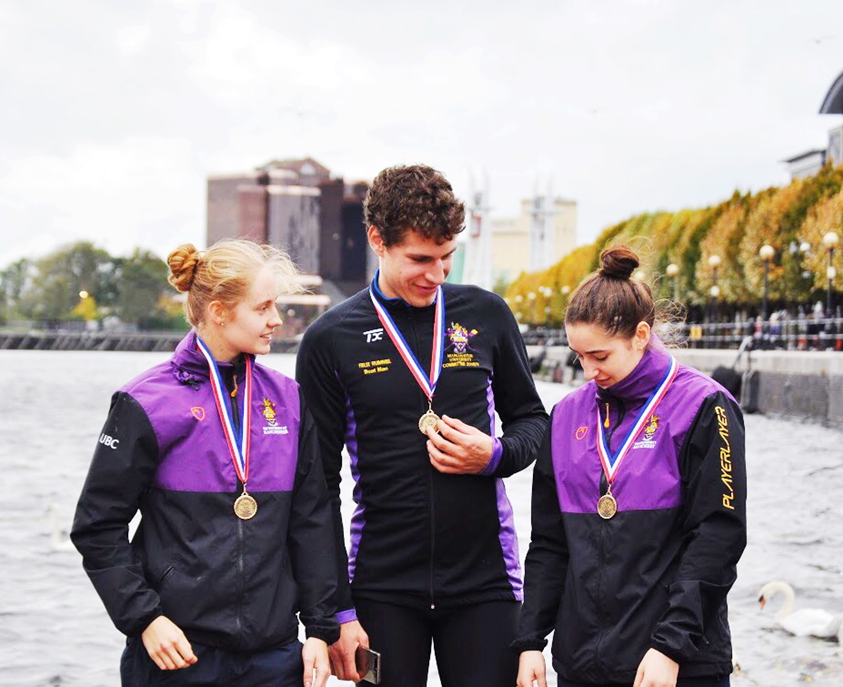
Rowing is a very popular sport, however people seem to either know nothing at all or everything about it. Here are some of the basic facts: rowing is one of the oldest Olympic sports and is one of Team Great Britain most successful disciplines at the Olympics, winning a gold medal every year since 1984. Rowing is GB’s third most successful Olympic sport, after Athletics and Cycling, with 58 medals in total.
A misconception about rowing is that it is “all in the arms”, quite the contrary is true with the arm muscles contributing very little. If done properly most of your power comes from your legs. When you put your blade into the water you squeeze your abdominal muscles and set your back muscles in a static contraction to connect the handle to your footplate. You then plantar flex your ankle and extend your knee joint using your quadriceps. When your knee is coming to the end of extension you use your lower back muscles and glutes to swing your torso backwards, finishing off the stroke by pulling the handle into your chest.
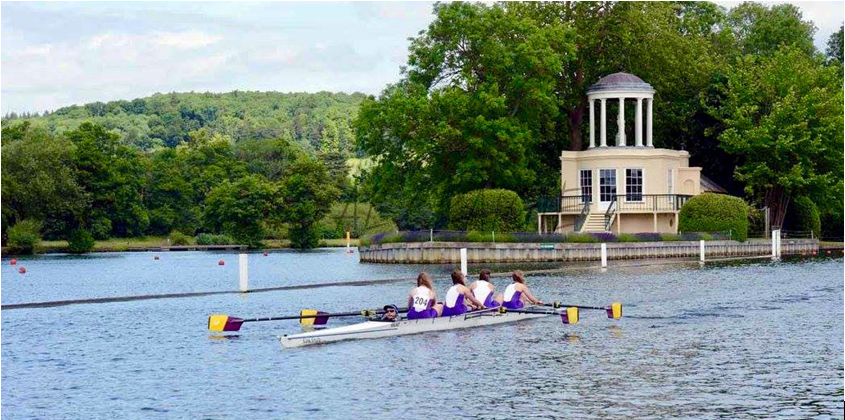
There are two classes of rowing boat, a sculling boat in which the rowers have two blades each or a sweep boat where rowers use one oar each. Sweep boats can range in size from an eight to a pair and sculling boats range from a quad to a single. We also have two seasons: a head season which runs through the winter. These races usually range from 3 km to 8 km, boats start one after another and classic examples are the Oxford Cambridge Boat Race or The Head of the River Race. Regatta seasons generally runs from May to August, and the races are normally 2 km (the same as the Olympic distance) with multi-lane racing. The most famous regatta is Henley Royal Regatta in July where Olympians, students and amateurs from all over the world race each other.
MUBC
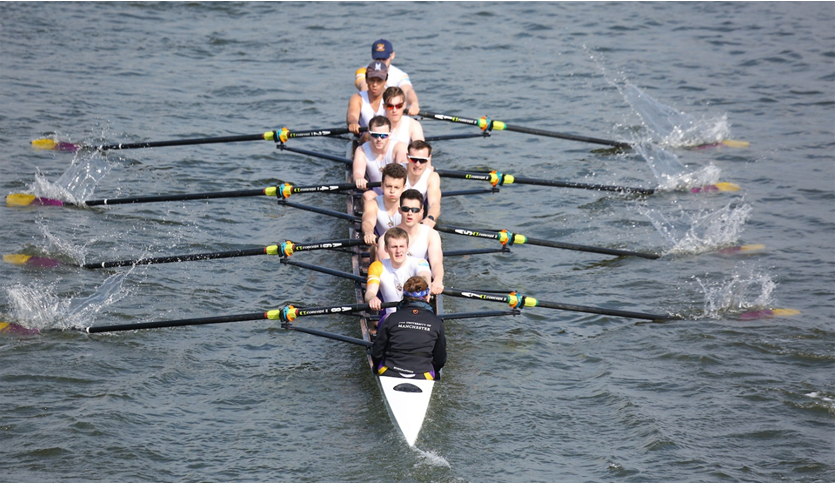
Manchester University Boat Club (MUBC) is one of the oldest and largest sport clubs at UoM, with around 200 members every year. Founded in 1932, the Boat Club has since grown into a thriving group for both novice and senior athletes. We have an ergometer training room at the Armitage Sports Centre and our boat house is on the Bridgewater Canal in Sale. We train and compete throughout the whole of the academic year all over the country. A usual training week is 8 to 10 sessions, consisting of water outings, ergometer sessions, weights and circuits.
Common rowing injuries
The most common rowing injury is a rib stress fracture. This usually occurs in the lead up to head season when we are doing long distances on the water and ergometer to build our aerobic base. A normal session would be a 18km paddle or an hour on the ergometer. We try to combat this injury by training our cores often. The second most common area to injure in rowing is your lower back. As fatigue sets in a rower’s posture slumps and the back becomes more rounded, which puts more strain through the lower back. Teaching proper technique, increasing flexibility and core strength are important to prevent this injury, as well as many other injuries in our sport.
The use of sports massage and sports physiotherapy also helps keep on top of all the aches and pains accumulated during our intense training. For this reason, we are looking forward to our new partnership with My Sports Injury Manchester. Our athletes are always in need of a sports rehabilitation clinic and we know their injury specialists will help us to keep achieving a high level of training and racing.