
The Heated Muscle Scraper: Transforming Sports Massage and Recovery
Introduction
Modern athletes and fitness enthusiasts relentlessly pursue performance, recovery, and injury prevention. As technology advances, so do the tools available to support these goals. Among the most groundbreaking innovations is the heated muscle scraper, a device rapidly gaining traction in sports massage therapy. In this comprehensive article, we’ll unveil what makes heated scrapers exceptionally effective, explore their science-backed benefits, and explain why they’re redefining sports massage for professionals and the self-care market alike.
What Is a Heated Muscle Scraper?
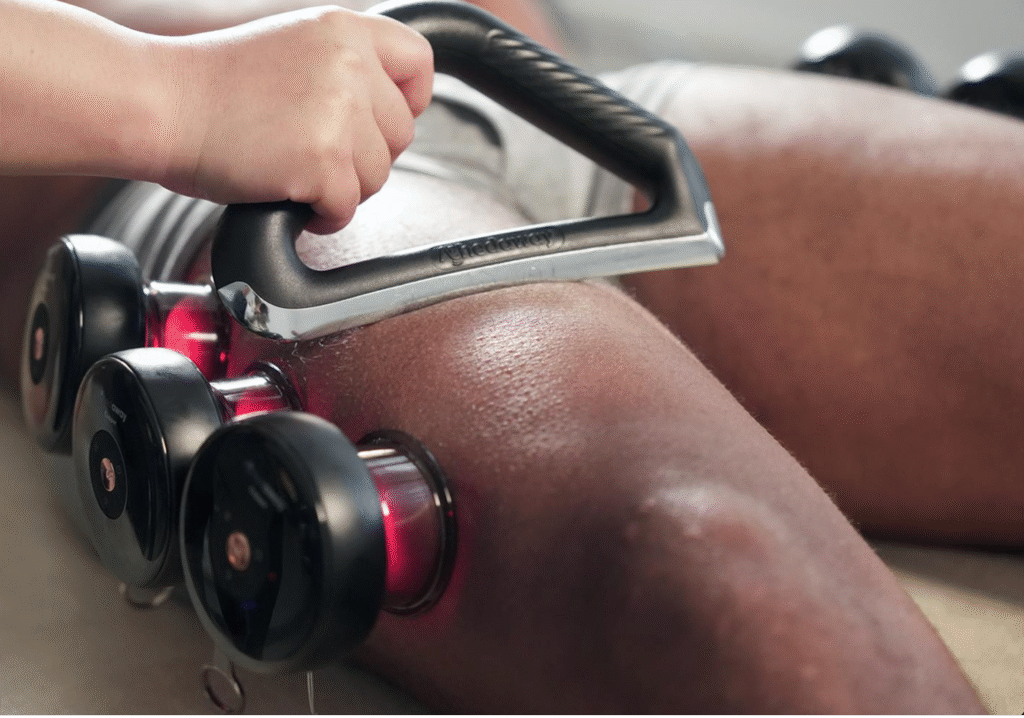
A heated muscle scraper is a tool that combines Instrument Assisted Soft Tissue Mobilization (IASTM) – think Gua Sha and Graston Technique – with added heat. Traditional muscle scrapers, usually metal or ceramic, are used to apply controlled pressure and scraping motions to muscles and fascia. Heated scrapers build on this established technique by adding adjustable heating elements. Many people find the added warmth makes the muscles feel more relaxed and the treatment more comfortable.[1][2][3]
How Do Heated Muscle Scrapers Work?
Heated scrapers use ergonomic designs and materials such as stainless steel, ceramics, or medical-grade aluminium, often with adjustable temperature controls (typically ranging from 38°C to 55°C). The combination of heat and scraping is commonly used as part of a routine to support:[4][3]
- Increase local blood flow
- Warm, relax, and soften muscle tissue
- Promote lymphatic drainage
- Reduce sensitivity and discomfort
- Support muscle recovery and mobility[1][3][5]
Some scrapers also include infrared technology, which some users find gives a deeper sense of warmth that can be soothing after exercise or general muscle soreness.[4]
The Science Behind Heated Scraping
Instrument Assisted Soft Tissue Mobilization (IASTM)
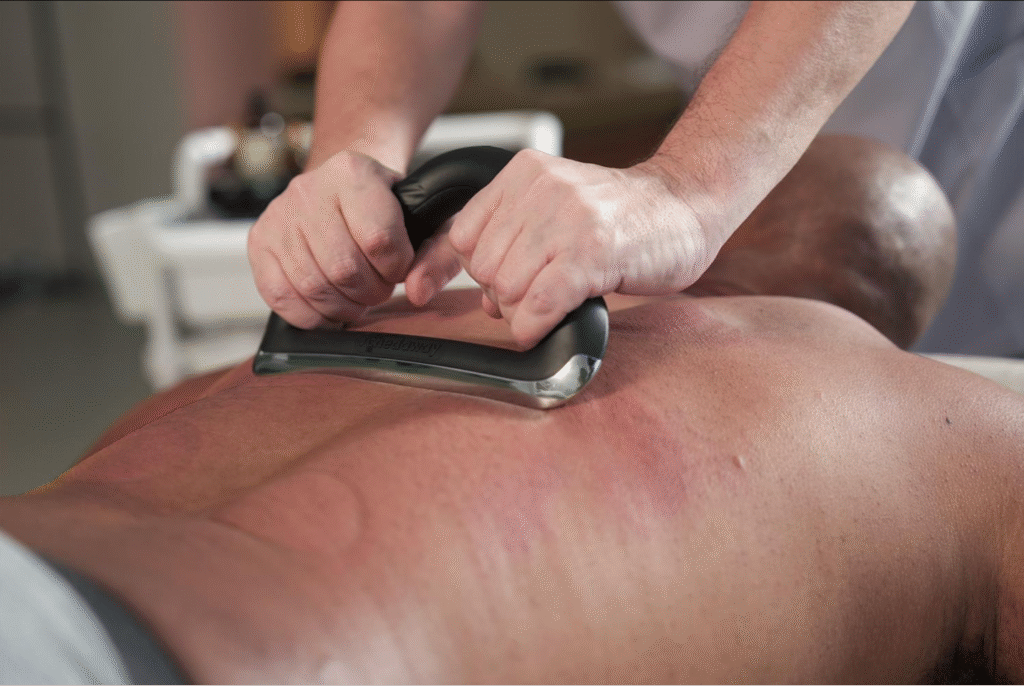
IASTM is an evidence-supported treatment for breaking down scar tissue, releasing adhesions, and improving tissue function. By applying pressure with specially designed tools, therapists can target specific restrictions within soft tissue, promoting healing, increasing range of motion, and reducing pain.
The Power of Heat
Heat therapy, long used in rehabilitation and relaxation settings, is thought to support blood flow and can have a soothing effect on nerves and muscles. Many people find treatment more comfortable when heat is applied alongside scraping, as cold scrapers can cause muscle guarding, making it harder to work through deeper tissue layers.[1][2]
Key Benefits of Heated Muscle Scrapers in Sports Massage
| Benefit | Description |
| Enhanced Blood Circulation | Heat vasodilates blood vessels, increases tissue nutrition, and flushes metabolic waste[1][3][5] |
| Faster Muscle Relaxation | Warmth decreases muscle tension, priming tissue for deeper, more effective manipulation[2][3] |
| Reduced Discomfort | Clients find heated scraping less painful, increasing relaxation and treatment acceptance[1][5] |
| Expedited Recovery | Enhanced tissue mobility facilitates healing, shortens downtime after hard workouts or injuries[4][3] |
| Improved Range of Motion | Breaks down adhesions while heat relaxes connective tissue, boosting flexibility[2][6] |
| Better Client Experience | Many clients specifically request heated tools for comfort and effectiveness[2] |
Ideal Applications: Who Benefits the Most?
Heated muscle scrapers are now a staple in the toolkit of:
- Sports massage therapists: Using the tool to support flexible treatment across muscle groups.[1][2][5]
- Physical therapists and chiropractors:Treating soft tissue injuries, chronic pain, and postural problems.
- Athletes: From runners and cyclists to footballers, many athletes use heated scrapers as part of their recovery routine after training or competition.[5]
- Fitness enthusiasts: Using the scraper at home or in clinics to help ease muscle soreness after intense workouts.[4]
- Individuals with arthritis/joint pain: Some people use the scraper to help with a feeling of joint stiffness and to support range of motion.[4]
Case Study: Achedaway Heated Muscle Scraper
The Achedaway Scraper is a prime example, offering:
- Adjustable heat (three levels up to 50°C)
- Three interchangeable edgesto target multiple muscle groups
- Lightweight, ergonomic design for self-care and professional use[1][2][3]
- Easy sanitationfor clinic and personal use
Many users and therapists say treatment feels more comfortable when heat is combined with scraping. The heating element is designed to warm tissue and support blood flow before deeper scraping begins.[1][2][5]
Safety and Best Practices
Heated muscle scrapers are considered safe for most healthy individuals, provided the following guidelines are observed:
- Heat settings should be adjusted to personal tolerance.
- Avoid scraping over open wounds, bruises, or inflamed areas.
- As with any soft tissue technique, anyone who is pregnant or managing a medical condition such as deep vein thrombosis or uncontrolled diabetes should consult a health professional before use.[4]
- Stretching and staying hydrated alongside scraping may support recovery.[4]
Conclusion
The heated muscle scraper brings together the deep-tissue approach of traditional scraping with added heat, and many people find this combination more comfortable than scraping alone. Whether you’re a sports professional, a therapist, or a weekend warrior, a heated scraper can be a useful addition to your recovery routine.[1][2][3][5]
Ready to experience the benefits of heated scrapper sports massage firsthand? Book your session today and unlock faster, more comfortable recovery!
References
References – 6 sources
- Liu Y et al. Instrument-assisted soft tissue mobilization for musculoskeletal disorders: a systematic review and meta-analysis of its effects on pain, function, and range of motion. Eur J Med Res. 2026.
- Seffrin CB et al. Instrument-Assisted Soft Tissue Mobilization: A Systematic Review and Effect-Size Analysis. J Athl Train. 2019.
- Nazari G et al. The Effectiveness of Instrument-Assisted Soft Tissue Mobilization in Athletes, Participants Without Extremity or Spinal Conditions, and Individuals with Upper Extremity, Lower Extremity, and Spinal Conditions: A Systematic Review. Arch Phys Med Rehabil. 2019.
- Rousse Y et al. Isolated and Combined Effects of Cold, Heat and Hypoxia Therapies on Muscle Recovery Following Exercise-Induced Muscle Damage. Sports Med. 2025.
- Takahashi N et al. Local heat application to the leg reduces muscle sympathetic nerve activity in human. Eur J Appl Physiol. 2011.
- Paanalahti K et al. Adverse events after manual therapy among patients seeking care for neck and/or back pain: a randomized controlled trial. BMC Musculoskelet Disord. 2014.
Book your session
To arrange your appointment or speak with our team, please call 0161 243 1168.