
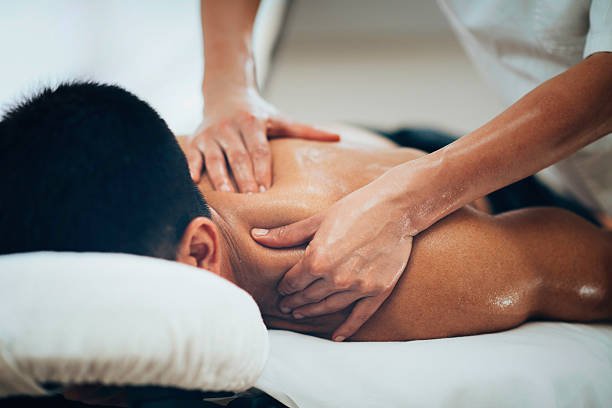
I winced when my physiotherapist first suggested sports massage. Like many athletes, I’d heard the horror stories about excruciating deep tissue work that left people hobbling home.
Are Sports Massages Painful?
Sports massage doesn’t have to be a painful ordeal. Modern sports massage therapy focuses on therapeutic effectiveness rather than enduring unnecessary discomfort. Research shows that whilst some temporary discomfort may occur, the benefits far outweigh any brief uneasiness.[1][2]
The level of discomfort experienced during sports massage varies significantly based on individual pain thresholds, muscle condition, and the specific techniques employed by your therapist. What one person finds mildly uncomfortable, another might perceive as deeply relaxing.[3]
Understanding the “Good Pain” Phenomenon
Many clients describe sports massage sensations as “good pain” – that productive feeling when tight muscles finally release their grip. This therapeutic discomfort signals that deep tissue work is effectively breaking down adhesions and improving circulation.[4][5]
According to research published in BMJ Open Sport & Exercise Medicine, sports massage can reduce delayed onset muscle soreness (DOMS) by 13% compared to passive recovery. The temporary discomfort during treatment translates into significant pain reduction afterwards.[6][1]
The Science Behind Sports Massage Discomfort
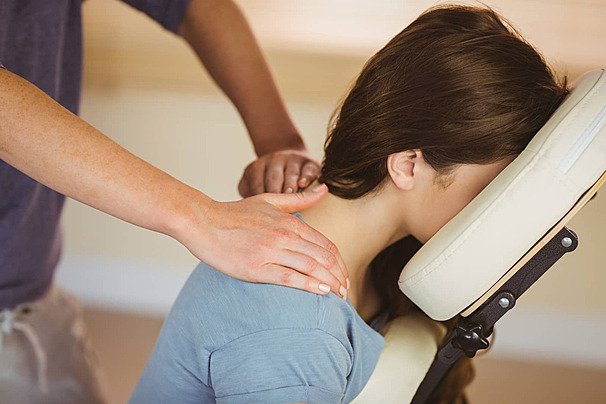
How Pressure Creates Relief
Sports massage employs firm pressure to reach deeper muscle and connective tissue layers. This pressure breaks down muscle knots, improves blood flow, and releases tension that’s accumulated from training or daily activities.[2][7][5]
The discomfort isn’t arbitrary torture – it’s your nervous system responding to therapeutic intervention. Research indicates that massage activates mechanoreceptors and proprioceptors, which can actually reduce pain perception through the gate control theory of pain.[4]
Individual Pain Thresholds Matter
Your pain tolerance plays a crucial role in your massage experience. Athletes often possess higher pain thresholds than sedentary individuals, making sports massage more comfortable for active people. However, even beginners can enjoy effective treatment when therapists adjust their approach accordingly.[8]
A study involving 150 participants found that both heavy rolling massage and manual massage significantly increased pain thresholds compared to control groups. This suggests that regular massage may actually improve your tolerance for therapeutic pressure over time.[4]
Sports Massage vs Physiotherapy: Different Approaches to Pain Relief
Whilst sports massage excels at recovery and performance enhancement, physiotherapy addresses specific injuries and movement dysfunctions. Sports massage supports active lifestyles through tension relief and improved circulation, whereas physiotherapy provides diagnosis-driven treatment for pain and rehabilitation.[9]
Think of sports massage as maintenance for your musculoskeletal system – like servicing your car regularly. Physiotherapy, however, is more like taking your car to the mechanic when something’s actually broken.
Dr. Jason Brummitt notes in his research that “despite the fact clinical research has been performed, a poor appreciation exists for the appropriate clinical use of sports massage”. This highlights the importance of understanding when each therapy is most beneficial.[10]
Case Study: Professional Athletes and Pain Perception

Research into pre-event sports massage among athletes has produced mixed findings, with some studies pointing to a decline in performance measures such as vertical jump and sprint speed rather than an improvement. This is one reason many therapists favour scheduling massage after activity rather than immediately before competition, even where some initial discomfort during treatment is normal.[11]
Similarly, some runners choose to have a sports massage after a marathon as part of their recovery routine, though the evidence for how much this affects muscle soreness is limited. Many find that any discomfort during treatment feels manageable alongside other recovery steps such as rest and hydration.[12]
Practical Strategies for Managing Massage Discomfort
Communication Is Key
Your massage therapist can’t read your mind. If pressure feels too intense, speak up immediately. Effective sports massage works within your comfort zone whilst still achieving therapeutic goals.[13][3]
Professional therapists understand that everyone’s different. They’ll adjust pressure, technique, and focus areas based on your feedback and tolerance levels.[5][14]
Preparation Makes a Difference
Arrive hydrated and avoid intense training immediately before your session. Dehydration and pre-existing muscle fatigue can amplify discomfort unnecessarily.[15]
Consider scheduling your first massage on a rest day when muscles aren’t already compromised from recent workouts.
Post-Massage Expectations
You might experience mild soreness for one to three days following treatment, similar to delayed onset muscle soreness after exercise. This normal response indicates that therapeutic changes are occurring within your muscle tissue.[15]
Staying hydrated, moving gently, and getting adequate rest can help support your recovery and may ease post-massage discomfort.[14][5]
Expert Insights on Sports Massage Benefits
Modern research demonstrates that sports massage offers numerous advantages beyond simple relaxation. Studies show improved flexibility, reduced muscle tension, enhanced circulation, and faster recovery times.[16][2]
A comprehensive review published in 2023 found that whilst massage doesn’t directly improve motor abilities, it significantly reduces pain perception and delayed onset muscle soreness. These psychological and physiological benefits contribute to improved training consistency and performance outcomes.[2]
There may also be psychological benefits. Some early research suggests sports massage can help people feel more relaxed and may support a reduction in stress, though the evidence here is limited and further research is needed.[17]
Actionable Takeaways
Before your first session:
- Schedule on a rest day to minimise existing muscle tension
- Arrive well-hydrated to reduce sensitivity
- Communicate your pain threshold and any concerns with your therapist
During treatment:
- Speak up if pressure becomes uncomfortable – your therapist will adjust
- Focus on breathing deeply to help your muscles relax
- Remember that mild discomfort often signals effective treatment
After your massage:
- Expect possible mild soreness for 1-3 days (this is normal!)
- Stay hydrated to help flush metabolic waste from treated muscles
- Avoid intense exercise for 24 hours to maximise recovery benefits
Conclusion
Sports massage needn’t be a painful experience that you dread. With proper communication, realistic expectations, and a skilled therapist, you can enjoy significant recovery and performance benefits without unnecessary suffering.
The temporary discomfort during treatment pales in comparison to the lasting relief from muscle tension, improved flexibility, and accelerated recovery that follows. Remember – if sports massage helps professional athletes perform at their peak, imagine what it could do for your training and daily comfort levels.
Ready to experience the benefits of professional sports massage? Don’t let fear of discomfort prevent you from discovering this powerful recovery tool that could transform your athletic performance and overall well-being.
Book your sports massage session today.
- https://bmjopensem.bmj.com/content/6/1/e000614
- https://pubmed.ncbi.nlm.nih.gov/37368560/
- The Association for Soft Tissue Therapists (SMA).
- https://pmc.ncbi.nlm.nih.gov/articles/PMC4587678/
- Weerapong P et al. The mechanisms of massage and effects on performance, muscle recovery and injury prevention. Sports Med. 2005.
- https://pmc.ncbi.nlm.nih.gov/articles/PMC7228568/
- Poppendieck W et al. Massage and Performance Recovery: A Meta-Analytical Review. Sports Med. 2016.
- https://dergipark.org.tr/en/download/article-file/91722
- What is physiotherapy? The Chartered Society of Physiotherapy.
- https://pmc.ncbi.nlm.nih.gov/articles/PMC2953308/
- Arabaci R Acute effects of pre-event lower limb massage on explosive and high speed motor capacities and flexibility. J Sports Sci Med. 2008.
- Szajkowski S et al. Foam Rolling or Percussive Massage for Muscle Recovery: Insights into Delayed-Onset Muscle Soreness (DOMS). J Funct Morphol Kinesiol. 2025.
- Yin P et al. Adverse events of massage therapy in pain-related conditions: a systematic review. Evid Based Complement Alternat Med. 2014.
- Field T Massage therapy research review. Complement Ther Clin Pract. 2016.
- Paanalahti K et al. Adverse events after manual therapy among patients seeking care for neck and/or back pain: a randomized controlled trial. BMC Musculoskelet Disord. 2014.
- https://pmc.ncbi.nlm.nih.gov/articles/PMC10302181/
- Field T et al. Cortisol decreases and serotonin and dopamine increase following massage therapy. Int J Neurosci. 2005.
- https://www.sciencedirect.com/science/article/pii/S1836955316000187
- https://jamanetwork.com/journals/jamanetworkopen/fullarticle/2821154
- https://www.sciencedirect.com/science/article/pii/S1836955319300190
- https://www.sciencedirect.com/science/article/pii/S2468781219302036
- https://pmc.ncbi.nlm.nih.gov/articles/PMC7043719/
- https://pubmed.ncbi.nlm.nih.gov/32426160/
- https://pmc.ncbi.nlm.nih.gov/articles/PMC11979224/
- https://scholarworks.umt.edu/etd/1005/
- https://bmjopensem.bmj.com/content/11/1/e002486